

Teer Procedure
 Home
Home- Teer Procedure


Medically Reviewed By Dr. Meghav Shah Updated on July 9, 2026
TEER stands for Transcatheter edge-to-edge repair. It is a catheter-based method to treat leaky heart valves, in particular the mitral valve, however, the procedure is also being increasingly used in tricuspid valve treatments. The principle of TEER procedure is to clip leaflets of valves to prevent regurgitation. It is done without opening the chest surgically. While surgical resolution has its own advantages, TEER is highly recommended for fragile, older and high-risk patients where the risks of surgery often outweigh the benefits.
Outcomes for TEER in India match global standards, with a device success rate greater than 90%. The durability of mitral valve regurgitation at 1-2 years also remains high, and significant improvements are seen in quality-of-life scores.
Reference: JACC: Cardiovascular Interventions – 1-Year Outcomes With Fourth-Generation Mitral Valve TEER From the EXPAND G4 Study (2023).
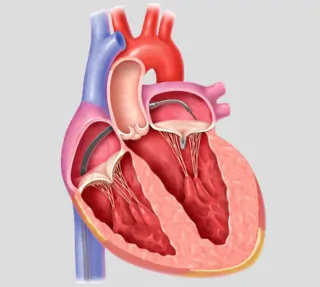
Conditions Treated with TEER Procedure
As explained, TEER procedure is mainly used to treat leaky heart valves — a condition in which the 'leaflets' of valves don't close, so the blood flows backwards causing feelings of breathlessness, fatigue or swelling in the abdomen and legs. TEER mainly addresses mitral valve regurgitations, but is increasingly being used in Tricuspid valve regurgitations too.
Normally, valves are like a one-way door. They open to let blood flow in a certain direction and then close. The leaflets are interlocking tissue strings that keep this system in place. With regurgitating valves, the 'door' becomes leaky because the interlocking of leaflets is compromised. They're either damaged, stretched or pulled out of place, so they no longer meet properly. In this situation, each heartbeat pushes some blood backwards, resulting in an overloading of the upper chamber and lungs. The symptoms of fatigue, breathlessness and swelling result from these.
Doctors tend to recommend TEER as an intervention in cases of moderate to severe leaks, when medication alone is not working. Echocardiograms and other tests are used to understand the valve's anatomy and function, and decide whether it's suitable for clipping rather than full replacement. As suggested earlier, if the patient is frail, older and has other serious illnesses, TEER is the preferred intervention.
As mentioned earlier, TEER is also being considered for patients with severe tricuspid regurgitation (TR), with preserved or non-end stage RV function and without advanced organ failure.
Indications for TEER Procedure
- Severe symptomatic regurgitation despite medical therapy, where surgery is high-risk due to factors like age, frailty, prior cardiac surgery and other comorbidities.
- Valve anatomy matters too — adequate leaflet length and thickness, non-extreme calcification (as stiffened leaflets are harder to clip). Additionally, acceptable LV function and pulmonary pressures are necessary for a go-ahead.
- These are the clinical parameters. From a broader standpoint, doctors assess the extent to which the leak is affecting daily life. Sometimes, if it isn't causing a significant impact, they prefer to leave it be and manage with medications for as long as possible.
Reference: Interventional Cardiology – Mitral Transcatheter Edge-to-edge Repair: BCIS Position Statement (2025).
Step-by-Step Guide to TEER Procedure
- For mitral TEER, the very first step is a pre-procedure evaluation. Medical teams have gotten stricter with the consistency and timeliness of these evaluations to ensure that closer to the time of the procedure, parameters are as stable as possible.
- A detailed transthoracic or transesophageal echo (usually 3D) is the first step to quantify MV regurgitation and anatomy. It helps medical teams understand mechanism, leaflet anatomy, coaptation gap, calcification levels, LV function and pulmonary pressures.
- After this, a CT Angiogram or regular angiogram is conducted, this is to optimize for heart failure, blockages and other potential risks. Geriatric and anesthetic risk assessment is also done via a heart team. Here, doctors may explain the concept of biological and chronological age. Chronological age refers to the age of the person, while biological age refers to the level at which organs are functioning and the age it's representative of. For example; a 68 year old can have a biological age of 75, due to advanced deterioration of some organs. The medically relevant aspect is biological age and not chronological age.
- The procedure itself is conducted in a cath lab or hybrid lab, under general anesthesia or deep sedation. The preferred route, as with most catheterization procedures, is femoral vein access. A transseptum puncture is made to enter the left atrium; fluoroscopy or a 3D TEE guides the steerable guide catheter.
- The next step is device navigation and actual clipping. The tricky part here is grasping the leaflets and aligning them properly for clipping. The clip system is advanced into the left atrium and oriented towards the regurgitant section. Under a TEE for guidance, the clip is aligned, crosses into the LV and then retracts to grasp anterior and posterior mitral leaflets at the target segment. When the clipping is finished, a double-orifice valve is created.
- An immediate echo assessment is done to gauge reduction in mitral valve regurgitation. If the regurgitation remains significant, an additional clip may be planted. Hemodynamic parameters are monitored next, and once the reduction in MR is satisfactory the clip is detached, venous access closed and the patient is moved to monitored care.
- The procedure can last anywhere between 1.5 to 3 hours.
- Tricuspid TEER or T-TEER follows a similar process, except access is through the right atrium and particular attention is paid to RV function and pacemaker (if any) positioning.
Advanced Techniques in TEER Procedure
3D imaging: Modern TEER relies very heavily on three-dimensional imaging (3D TEE) and sometimes, fusion imagining with a live x-ray (fluoroscopy) to optimize the finer details of the procedure.
Multiple clipping: For complex MR cases, multiple clips have become increasingly used. They are placed in a central + lateral 'sequential' strategy to work well as a combo.
Complex anatomies: Advancements in clip design and native manufacturers whose R&D focuses on variations in coronary anatomies are expanding the use-case scenarios of TEER. Once it was recommended as a gentle alternative to surgery; now, it can take on more complex cases.
T-TEER: As explained above, TEER is being used for tricuspid valve regurgitation. Studies have shown vastly improved TR reduction and quality-of-life outcomes. However, there's yet to be a clear hospitalization/mortality advantage as yet. These outcomes will likely arrive with time, as the case studies broaden.
All in all, the technological advances are only as good as the practicing teams, and the overall TEER volume of a center. In general, higher the output, more reliable the outcomes as the exposure to a wider variety of cases is natural.
Types of Clips Used in TEER Procedure
Based on the valve, there are different clip designs and manufacturers.
MitraClip: This is the most commonly used clip system globally for the mitral valve. It comes in different sizes and arm lengths to suit various leaflet thicknesses and gaps. These sizes allow doctors to choose the best clip, without over-narrowing the gap.
MyClip: An Indian clip system, with slight variations on the handling and clipping positions.
PASCAL: Another TEER system, allowing for independent leaflet grasping and a few other design tweaks that favour complex anatomies.
Triclip: A TEER system used specifically for Tricuspid valve regurgitation. Adapted to the larger, more flexible tricuspid valve, but similar in principle to the Mitral valve systems.
Reference: JACC: Cardiovascular Interventions – 1-Year Outcomes From the CLASP IID Randomized Trial for Degenerative Mitral Regurgitation (2023).
Recovery and Rehabilitation
Following TEER, most patients spend anywhere between 1-3 days in the hospital, depending on the particulars of their condition and overall health. Monitoring and medicines are started on the same day, and gentle walking is encouraged on the same or next day. Groin discomfort (tenderness and pain) is common, as is overall fatigue. Obviously, pain levels are very mild compared to heart surgery.
At home, the main focus is on gradual walking and resuming home tasks. Doctors stress on listening to the body as opposed to just pushing through recovery. Short walks and no heavy lifting for a couple of weeks, and any sort of increased breathlessness and chest pain is to be treated like a red flag.
Many return to basic household tasks or office work within a couple of weeks. Those in very physically-intensive occupations may have to wait for a bit more. Regular follow ups and echocardiograms check how well the valve is working and guide medications.
From a lifestyle perspective, the obvious still applies — healthy eating, reduced/no smoking and alcohol intake, low salt intake and constant daily movement to understand how the heart is responding. Fried foods, oily preparations and heavily processed foods and sugars are not recommended. Restrict the use of full-fat dairy, ghee and butter. Switch over to cold-pressed oils and more greens with lean meats.
Food can be a very emotional and cultural topic, and it's necessary to change, with flavour profiles intact. This tends to produce significantly higher adherence.
Benefits of TEER
The most obvious benefit is symptom relief — breathlessness and fatigue are significantly lowered, and exercise tolerance is greater. The 6-minute walk test is a good benchmark — a person has to walk up and down a 30 meter flat stretch at a fast pace. Almost always, patients will find that they can do this better than before.
Compared to surgery, TEER offers a reduced hospital stay and time in the ICU. It also offers a far quicker return to daily activities.
For frail, high-risk patients TEER is very meaningful in improving the quality of life, even if survival impact is modest. These are people often left with the choice of no surgical resolution, or gentle optimization.
Reference: NEJM – Transcatheter Mitral-Valve Repair in Patients with Heart Failure (COAPT Trial).
Risks and Complications
Any procedure comes with its risks and TEER is no different. Of course, it carries lower risks than surgery, but that doesn't mean there are none.
Periprocedural risks: These are things that can go wrong during the procedure. Vascular complications like femoral access, bleeding or hematoma need to be accounted for. Pericardial effusion/tamponade is a risk, device embolization or even leaflet injury could occur. Although these are rare at super-speciality/high-volume centers.
There is a chance the procedure only offers partial MR reduction. This limits its benefit and necessitates a repeat intervention. Sometimes, clip detachment or loss of leaflet insertion can also require another TEER or even surgery.
There is no strong indicator for stroke or increased mortality rates, as compared to medical therapy. However, this is dependent on ventricular function and other comorbidities. So, cardiovascular complications are always a factor.
While surgery does leave less room for revisions, TEER revisions are at approximately 9% around the 5 year mark.
Frequently Asked Questions
Why might TEER be recommended instead of surgery?
TEER is minimally invasive — no chest incision or heart-lung machine, and faster recovery. It's often preferred when surgery carries higher risk, or when the type of leak responds well to a clip. The Heart Team decides based on your anatomy and risk.
What are the risks of mitral valve surgery?
Bleeding, infection, stroke, kidney strain, rhythm problems, and a longer recovery. Individual risk depends on age, heart function, and other conditions, and is estimated with a surgical risk score.
How is the severity of a valve leak measured, and why does it matter?
It's graded mild, moderate, or severe. Procedures are considered mainly for severe, symptomatic leaks; milder ones are usually monitored.
What happens without any treatment?
A severe leak tends to worsen, straining the heart and raising the risk of heart failure and hospitalization over time. Milder cases are often just watched.
What are the risks or complications of TEER?
Generally safe. Uncommon issues include access-site bleeding, a residual leak, a clip needing adjustment, and rarely stroke.
Which clip system do you use, and why?
The two mostly used systems are MitraClip and PASCAL, comparable in safety and effectiveness. The choice depends on valve anatomy and operator experience.
What other treatment options are available?
Medication, surgical repair or replacement, and — in selected cases — transcatheter valve replacement. The Heart Team weighs these together.
Note: This is general information; your treatment plan is individualized — please discuss it with your cardiologist.

