

Pericardial Disease
 Home
Home- Pericardial Disease


Medically Reviewed By Dr. Meghav Shah Updated on June 02, 2026
It refers to disorders that affect the sac covering the heart. The two main disorders are pericarditis and pericardial effusion. Pericarditis is the inflammation of the heart sac, and pericardial effusion is the build up of fluid in the heart sac. As illustrated below, pericarditis can be a gateway to pericardial effusion. It can affect perfectly healthy people, with no prior heart conditions. Causes include viral infections, immune disorders, heart attacks, or cancer, but in India, causes like tuberculosis (as high as 44% of cases), kidney problems (25%), and hypothyroidism prevail, unlike the malignancy-dominant West.
Pericardial disorders are characterized by a few basic symptoms — chest pain which is more bearable when leaning forward, breathing difficulties (manifests in 66% of Indian patients), fever, tiredness and tachycardia (an increased resting heart rate) Early care is crucial from preventing an escalation into cardiac tamponade — think of this as a ‘constriction’ of the heart. Fluid or blood build up around the pericardial sac causes a squeezing effect, preventing the sac itself from filling up with blood. In India, kidney dysfunction and tuberculosis patterns are key to vigilance.
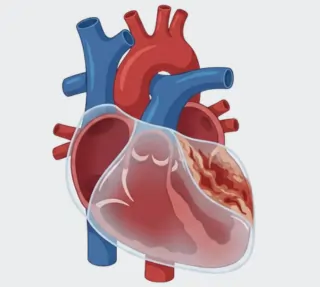
Causes of Pericardial Disease
Infectious Causes (most common globally, 80-85%)
Infections cause pericarditis by letting germs enter the heart sac. In turn, this triggers the immune system to overreact and cause an inflammation of the tissue. This is pretty much the same mechanism of any inflammation.
Viral infections (e.g., coxsackie or coronavirus) are the primary cause. Bacterial and fungal infections are less common. Tuberculosis is the most common infectious cause in India (17-44% of effusion cases), including constrictive pericarditis (38%). This is because the prevalence of TB in India is higher than in Western countries where viral infections are common.
Non-Infectious Causes (15-20%)
- Autoimmune: Lupus or rheumatoid arthritis lead to inflammation.
- Post-Traumatic cardiac surgery, heart attack, or radiation therapy (after cancer treatments).
- Metabolic: Renal failure (uremia, 25% in India) or hypothyroidism.
- Cancer: Metastatic tumor invasion into the pericardium (20.5% in India).
| Aspect | Pericarditis (Inflammation) | Pericardial Effusion (Fluid Buildup) |
|---|---|---|
| Primary Causes | Viral infections (coxsackie), idiopathic (80-90%), bacterial/TB, post-heart attack/surgery. | Often from untreated pericarditis; cancer, kidney failure (25% India), TB (17-44% India), trauma. |
| Key Risk Factors | Autoimmune (lupus), chest trauma, radiation, recent MI. | Immunosuppression (HIV), malignancy, hypothyroidism, post-op complications. |
| India Patterns | Viral/TB common. | TB is dominant (up to 44%), CKD high. |
Risk Factors for Pericardial Disease
Medical problems:
Chronic renal failure (25%), TB (17-44%), hypothyroidism, malignancy, and autoimmune disorders (lupus, rheumatoid arthritis – 12.5%). Regional health studies show that tuberculosis is common in India and there is a higher incidence of effusion-related disorders in Northern India. This could be linked to overcrowding/HIV and multiple other factors.
Risk Factors and Lifestyle
Recent cardiac surgery/trauma, radiotherapy/chemotherapy, dialysis, and immunosuppression (HIV). Economic underdevelopment increases the risk of tuberculosis in India — surrounding factors connected with daily life such as compromised hygiene due to poor housing, malnutrition, indoor pollution from stoves all contribute here. In addition, delayed diagnosis leads to late treatment.
Demographic Features
Age range 40-60 years, slight male predominance (55%), age 58 is the median in cancer patients. Women are more likely autoimmune-linked.
Protecting oneself against pericardial disorders begins with the basics — monitoring and managing diabetes, regularly keeping tabs on renal health through testing and dietary adjustments, TB screening is a must, additionally environmental hygiene drastically reduces the risk of infections as a gateway. Catching these disorders early prevents cardiac tamponade (symptoms below), which can bring with it a massive variety of complications.
Symptoms of Pericardial Disorders
As with many cardiac disorders, the first and most subtle symptoms are easy to ignore due to how ‘generalized’ they feel. It’s important to understand what’s worth tracking and reporting. For starters, never ignore chest discomfort, especially if accompanied by breathlessness:
- Immediate symptoms: These are the red flags that should be reported instantly. It’s important to not waste time guessing.
- Sharp chest pain: Usually a stabbing pain that worsens with deep breaths, coughing, or lying flat; eases when sitting up and leaning forward (hallmark of pericarditis).
- Abrupt difficulty breathing: Particularly during rest, because of pressure on the heart from excess fluid (observed in approximately 66% of Indian patients).
- Secondary symptoms: These are indicative, but worth tracking while watching for more obvious and specific signs.
- Palpitations: Irregular racing of the heart, caused by irritation.
- Low-grade fever or fatigue: Feelings like when you have the flu; indicative of either inflammation or infection.
- Subtle or advanced signs: Subtle tells that aren’t indicative by themselves, but could be giveaways.
- Dry cough, leg/abdominal swelling: From fluid overload or constriction.
- Pericardial rub: Scratchy sound that doctors hear through a stethoscope. This is not felt by the patient themselves, but it is indicative of trauma in the pericardium.
In India, breathlessness is the most common symptom (approx 66%) that leads to a diagnosis. This is because it is tied to TB-related effusions.
Differences Between Pericarditis and Cardiac Tamponade
While overlapping, it’s also essential to understand the variations between pericarditis and cardiac tamponade:
| Aspect | Pericarditis | Tamponade |
|---|---|---|
| Chest Pain | Sharp, stabbing, pleuritic (worse breathing/coughing), positional (better leaning forward). | Dull or absent; if present, less positional. |
| Breathlessness | Mild-moderate, worsens lying down. | Severe, sudden dyspnea even at rest. |
| Hemodynamics | Stable BP, normal pulse. | Low BP (hypotension), rapid/weak pulse, shock. |
| Other Signs | Fever, fatigue, pericardial rub (scratchy sound), palpitations. | Neck vein swelling (JVD), muffled heart sounds (Beck's triad), pulsus paradoxus (>10 mmHg BP drop on inhale), fainting. |
| Onset | Gradual (days). | Rapid (hours), progressive. |
ECG is characteristic with ST elevation/PR depression in pericarditis and low voltage/electrical alternans in tamponade. Echo will show effusion and chambers’ collapse in tamponade but not necessarily in pericarditis. Tamponade needs immediate intervention and drainage.
Diagnosis for Pericardial Disorders
First line (hospital visit)
The first thing doctors will do is listen for a ‘rub’ (a scratchy heart sound) that may indicate fluid accumulation. Of course, vital signs are taken and questions about chest pains and breathing problems are asked. A simple ECG can spot inflammation patterns (ST segment) or low voltage caused by fluid. Blood tests measure inflammation (CRP/ESR high), infection, or heart strain (troponin).
Second line (imaging confirmation)
Echocardiogram (echo) is key — ultrasound shows fluid amount (>20mm large), heart squeeze, or tamponade signs (chamber collapse). Chest X-rays reveal an enlarged heart silhouette.
Advanced lines (cause hunting)
A CT/MRI shows thickened areas or clots. Pericardiocentesis (needle aspiration) tests fluid for tuberculosis, cancer, or infection. In India, echo tests guide TB diagnosis (fibrin strands). Most cases can be diagnosed quickly; early echo tests prevent delays that can escalate into tamponade.
Treatment for Pericardial Disease
Treatment approaches for inflammation and effusion tend to be different. One focuses on easing pain and swelling, while the second on fluid drainage.
Medications (First-line for mild/acute cases)
Anti-inflammatory drugs such as ibuprofen and aspirin decrease inflammation and pain; colchicine prevents recurrences (works in up to 50%). Steroids are useful in cases of autoimmunity or resistant conditions, however, sparingly. Anti-tuberculosis drugs, such as rifampin and isoniazid, are critical in India common TB (17-44%). Antibiotics target bacteria; dialysis aids kidney-related effusion.
Management (symptomatic/huge Effusions)
Pericardiocentesis uses needle drainage with echocardiography — urgent if tamponade is present; it has a success rate of 97%. Placement of an indwelling catheter deals with recurrent effusion.
Surgery (recurrent/constrictive)
Surgery is recommended rather than just needle drainage (pericardiocentesis) in case of recurring, complicated, or dangerous pericardial effusions in order to minimize reaccumulation (29% vs 3% with surgery).
Key Indications for Surgery:
- Recurring pericardial effusions: Rapid recurrence of fluid accumulation following pericardiocentesis (e.g., more than 25 mL/day within 6-7 days) or requirement for repeated pericardiocentesis — surgical creation of pericardial window results in permanent drainage into the pleural space.
- Loculated or multiloculated effusion: Pockets of fluid that cannot be accessed by needles.
- Surgical tamponade: Causes like aortic dissection, post-heart attack rupture, or trauma — rapid drainage risks worsening tear.
- Infected/pericarditis: Requires washout/pericardiocentesis/biopsy.
- Constrictive pericarditis: Thickened sac requires pericardiectomy (full removal).
Obviously, surgical teams decide based on whether these cases are affected by TB, and the dosage of anti-TB medications (ATT).
Benefits of Treatment
Pericardial disease treatment offers rapid relief to most patients, and life-saving protection. Patients experience dramatic improvements within days to weeks and regain their normal lifestyle.
Relief from pain and symptoms:
Drugs like ibuprofen and colchicine relieve chest pain and breathing difficulty rapidly, within 1-2 weeks, while fluid drainage alleviates pressure on the heart and allows improved heart function.
Prevents serious complications:
Prompt treatment prevents life-threatening conditions such as tamponade (compression of the heart) and constrictive pericarditis (scar tissue formation). Colchicine reduces recurrences by 50%, whereas in India, tuberculosis drugs plus drainage reduce chances of constriction by 38%.
Full recovery boost:
Addresses root causes (TB, kidney issues), improving energy and quality of life. Surgery for tough cases offers a lasting fix — 90%+ success, fewer hospital visits. Most avoid long-term issues with follow-up echo testing.
What does this mean for a patient on a daily basis? They will breathe more easily, sleep better and live more actively. It’s obviously important to stick to meds, rest well and be timely with checkups.
Risks If Pericardial Disease Left Untreated
Ignoring pericardial disease lets fluid build around the heart. The symptoms may start mildly, but, as explained earlier, can escalate towards cardiac tamponade and other serious issues.
Least serious: worsening symptoms
Pain and breathlessness intensify; fatigue grows as heart strains. This is common initially, and the generalized nature of fatigue can make this stage easy to ignore.
Moderate: pericardial effusion grows
More fluid causes swelling (legs/abdomen), irregular heartbeats — daily life begins to suffer from reduced energy levels and inability to move.
Serious: cardiac tamponade
Fluid constricts the heart. This could become life-threatening — accompanied by systemic shock, organ failure and can lead to death if untreated.
Most serious: constrictive pericarditis
Scarring stiffens the sac (this is seen in 38% of TB-related cases in India); in turn, this can lead to chronic heart failure, liver/kidney damage, pulmonary hypertension. Fatal if left untreated.
In India, TB-driven effusions often lead to constriction without drainage/meds. Prompt care prevents around 90% of complications.
Recovery, Monitoring and Rehab
Recovery from pericardial diseases is usually smooth and quick for most — back to normal in 2-4 weeks with simple steps. Here’s a broad overview of what that looks like:
Initial Rest Phase (First 1-2 Weeks)
Rest at home; avoid heavy lifting, exercise, or bending over (worsens pain). Medications such as ibuprofen and colchicine are typically prescribed for pain management. Driving is usually avoided, as occasional bouts of dizziness could hit some.
Post-discharge monitoring and follow-up
Repeat ECG/echocardiography scans every three to twelve months. In India, TB patients require anti-TB meds for six months + tests for constriction.
Lifestyle for full recovery
Diet: Heart-healthy (fruits, veggies, low salt); it’s important to stay well-hydrated.
Exercise: A progressive regime is usually recommended, but the specifics change, based on the rate at which the patient is recovering. Usually, it’s light walking after two weeks without further straining the body until a doctor’s approval. A gentle flight of stairs may be allowed.
Stress/Sleep: Stress management is tricky, yet crucial. High stress levels don’t promote recovery. Breathwork may be recommended, or a meditation routine — even an app-guided practice is better than none. Sleep is medicine! A bare minimum of 7-8 hours of deep uninterrupted sleep can do wonders. A recovering body needs lots of rest; it’s crucial to not rush back to ‘normal routine’.
If symptoms reoccur, then doctors develop a long-term medication plan with colchicine/steroids.
Questions to ask your doctor:
If diagnosed with pericardial disease, it’s natural to feel a bit anxious and overwhelmed by the options ahead. Here are some questions that could help with decision making, when it comes to treatment.
Understanding the condition:
- What's causing my pericardial issue (e.g., virus, TB, kidney problems)?
- How severe is it, and is there fluid or tamponade risk?
- What do my test results (echo, ECG) show?
Treatment and next steps:
- What's the best treatment for me — meds, drainage, or surgery? Why?
- How long until I feel better, and what are side effects? Can you give me a breakdown of the recovery timeline?
- Do I need a TB test or any other cause-specific care?
Daily life and recovery
- When can I resume work, exercise, or drive? What sort of exercises should I avoid?
- Which lifestyle modifications (dietary and physical activities) can reduce chances of recurrence?
- How often are follow-ups, and what warns of complications? How do I keep a watch for these at home?
Long-term outlook
- What's my recurrence risk, and how do we manage it? How is this risk measured?
- How do other comorbidities (for example, diabetes) affect the treatment plan?

