

Venous Ulcer
 Home
Home- Venous Ulcer


Medically Reviewed By Dr. Antariksh Vijan Updated on May 11, 2026
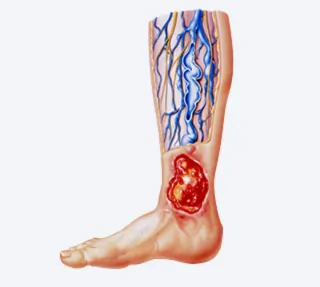
Venous ulcers, also called venous leg ulcers (because that’s the region of the body they most commonly occur), are chronic wounds primarily caused by a condition called chronic venous insufficiency — faulty vein valves lead to blood pooling and high pressure in the legs. These wounds most commonly affect the lower part of the leg, especially the inner part around the medial malleolus. The condition is very closely linked to varicose veins, which is a key trigger. Chronic wound prevalence is quite high — about 4 to 5 people in every 1000 have it. Within this larger category, venous ulcers are the most dominant, accounting for 34% of all chronic wound cases in the country. According to some studies, the disease is more prominent in Southern India, compared to other parts, but updated studies with wider sample sets need to confirm this.
Causes of Venous Ulcers
The causative factors are varied between rural and urban areas. In rural areas, the condition is associated with farmers, who spend very long hours standing on their feet. In urban areas, it is associated with highly sedentary lifestyles and conditions like diabetes and obesity. Delayed care often complicates matters, leading to painful, oozing wounds that linger for months.
In simple terms, venous ulcers occur when blood doesn’t flow back to the heart properly from the legs. This eventually leads to open sores (following other predating symptoms) that become rather hard to heal. Here are some of the main causes for this:
Weak or damaged valves (chronic venous insufficiency): Veins in the leg have one-way valves — like sluice gates — that push blood upwards to the heart, against gravity. If these valves weaken or get damaged with age, the direction of the blood flow can reverse. It can pool in the lower legs, creating a high pressure buildup. This starves the surrounding skin tissue of nutrients and oxygen, causing cells to die and ulcers to form.
Blood Clot (deep vein thrombosis – DVT): Any previous history of clots in the veins of the legs may lead to their scarring and blocking, restricting the free flow of blood and increasing the pressure further downstream, which in turn triggers or exacerbates ulcers.
Varicose Veins: These twisted, enlarged purplish-green/blue veins are an early sign of poor vein function. Dysfunctioning valves are a common cause. They worsen blood pooling and skin damage.
Other triggers include obesity (extra weight can constrict veins, increasing the pressure), leg injuries, surgery or burns that may have harmed veins; pregnancy — due to the increase in belly pressure and hormonal changes — can strain leg veins, smoking constricts blood vessels and naturally, has a negative impact. In India, rising diabetes, hotter climates in the plains, and delayed care add to the problem, turning minor vein issues into more stubborn ulcers. Catching early signs like leg discolouration or swelling can really help.
Risk Factors for Venous Ulcers
Venous ulcers are more likely if certain everyday factors lead to an extra strain on the legs. Here’s a breakdown by category:
Personal Health Factors
Age over 55: Blood vessels tend to naturally weaken with age; this in turn makes blood pooling easier.
Obesity: Extra body weight presses on leg veins, slowing blood flow and raising pressure.
Family history: Having family members or relatives who’ve suffered from varicose veins or clots marginally increases the risk.
Previous Medical Problems
Deep vein thrombosis (DVT) or pulmonary embolism: Old blood clots scar veins, in turn limiting blood circulation.
Leg injuries, surgery, or immobility: Scarring or immobility reduces the efficiency of the calf muscle pump responsible for propelling blood upward.
Lifestyle Habits
Sedentary jobs or inactivity: Sitting/standing too long (common in Indian corporate offices) stops blood from circulating well. In general, modern corporate life comes with many health risks.
Multiple pregnancies: Hormones and belly pressure stretch leg veins in women. Over time, this can affect circulatory patterns.
Symptoms of Venous Ulcers
Venous ulcers don’t just pop up; they develop gradually due to worsening circulation from damaged veins. Below is a basic description of stages to help recognize early symptoms.
Early Stage (Weeks to Months: Warning Signs): Leg swelling (edema) gets worse by the end of the day or when standing for too long. Calves feel heavy and achy, along with muscle cramps at night. Skin around the ankles may itch or feel ‘tight’. This is due to accumulated blood caused by malfunctioning veins.
Progressive Stage (Months: Skin Changes): Skin becomes reddish-brown due to discolouration caused by the leakage of blood proteins. It feels ‘thickened’ or ‘woody’ due to lipodermatosclerosis. Stasis dermatitis follows — inflamed, scaly, itchy patches. There is an increased prominence of varicose veins. Legs feel restless, scratching can lead to small wounds that heal slowly.
Ulcer Formation Stage (When Ulcers Appear): Open sores form, often near the inner ankle over bony spots. They're shallow, ragged-edged craters with moist red bases covered in yellowish crust (fibrinous exudate). Borders are uneven but clear. No pain at first, but swelling and heaviness intensify.
Advanced/Infected Stage: Ulcers grow larger, ooze pus-like discharge, develop foul odour, and become very painful if infected (ulcers turn redder, fever may occur). Surrounding skin breaks down further. Treatment becomes necessary to heal them, with further complications.
As mentioned earlier, the key is to catch ulcers and any skin changes early, and not be dismissive. Elevating legs and walking often helps. When signs become more obvious, it’s worth seeing a doctor about compression wraps. Most ulcers heal with prompt treatment, avoiding infections.
Diagnosis of Venous Ulcers
Venous ulcer diagnosis begins with a basic conversation with a doctor. At first, there’s no need for complex tests or imaging. Here’s how the diagnosis progresses stage wise:
Step 1: Patient History and Clinical Examination
Doctors first ask about leg swelling, pain and look for varicose veins. They also enquire about past clots, leg injuries or surgeries, and family history. While examining, they look for clues like ankle swelling (edema), brownish skin patches, thickened ‘woody’ skin (lipodermatosclerosis) and ulcers near the inner ankle — classic venous spots.
Step 2: Quick Blood Flow Test (ABI – Ankle Brachial Index)
This is a painless test to rule out artery blocks (which need different care). Blood pressure cuffs are used on the arms and ankles for this. Normal values are between 0.9 and 1.3; anything lower indicates combined causes.
Step 3: Ultrasound Exam (Duplex)
Ultrasonic probe with a gel examines vein valve function to determine whether there is reflux or thrombosis; a safe and simple examination that provides live pictures of blood flows.
Step 4: Rarely Used Additional Methods Venography (dye injection with X-ray) is done, only if doctors deem surgical treatment necessary. This is to map and study the deep veins more precisely.
In most cases, diagnosis takes place instantly and leads to the use of compression therapy. Early checking is crucial to avoid complications.
Treatment of Venous Ulcers
Treating venous ulcers focuses on improving blood flow, healing the sore, and preventing recurrence — most heal with consistent care. Here's a stage-wise approach, from basic steps to surgery if needed:
Stage I: Simple Treatment & Lifestyle Modification (First 1-4 Weeks)
Clean the ulcer daily using saline water; use moist dressings (hydrocolloid dressings) to cover it for protection and promote healing. Keep the legs raised above the level of the heart 3-4 times per day for 30 minutes (foot elevation pillows really help here); exercise by walking fast for about 30 minutes to improve circulation. Salt intake is reduced to prevent edema. The recommended compression bandages are stockings (20-40 mm Hg) — they squeeze legs gently to push blood back, healing 40-70% of ulcers in 12 weeks.
Stage 2: Add medications (if no improvement)
Doctors may prescribe pentoxifylline to improve blood flow or antibiotics if infected (they look for pus and/or fever). Pain relievers and skin creams soothe itching or dryness.
Stage 3: Advanced Non-Surgical (4-12 Weeks)
If ulcers persist, try multilayer compression wraps, pneumatic pumps, or growth factor gels. Weekly monitoring is important. Most ulcers tend to heal by this stage of intervention.
Stage 4: Surgery (For Recurring or Large Ulcers)
Surgery is considered when the ulcers are too advanced and there is a risk of infection spreading. Faulty veins are ‘corrected’ with endovenous ablation - EVLT procedure (laser/heat seals them closed), sclerotherapy (injection shrinks veins), or stripping (remove bad veins). Skin grafts cover big ulcers post-healing. Success: 80-90% recurrence-free at 1 year with compression treatment as a post-surgical follow-up.
Complications if Left Untreated:
Left untreated, venous ulcers will evolve from insignificant inconveniences into grave medical conditions. They won’t ‘just go away’. Below are the stages of progression:
Short term (Weeks to Months): Pain and swelling increase, making mobility difficult. Exudate (fluid ooze) develops on the wound, which crusts and becomes prone to infections that appear in the form of hot, red, infected, and malodorous (foul-smelling) skin. Daily activities get progressively harder due to constant pain.
Mid-term (Months): Venous ulcers grow larger and extend deeper into tissue layers. Cellulitis (an infection of the skin and underlying tissues) ascends the leg, producing fevers and chills. In addition, adjacent skin suffers and forms ulcers, while scar tissue develops, making calves appear inverted ‘champagne bottles’, restricting movement.
Long-Term (Years): Long-term inflammation leads to hypoxia and possible tissue necrosis. Transformation into malignant growth (Marjolin's ulcer) occurs in non-healing ulcers. Recurrence rates range between 60-70% in cases where the issue remains uncorrected. As a result, disability, depression, or even amputations occur in extreme cases.
Prevention of Venous Ulcers
Preventing venous ulcers is all about keeping blood flowing smoothly in the legs — small daily habits can stop them before they start. Here's a simple breakdown by category:
Lifestyle Changes
Maintain a healthy weight: This is a crucial baseline and one that’s largely controllable. Extra kilos squeeze leg veins, thereby increasing risk. Indian carb-heavy, protein deficient diets do not help the matter. More balanced meals, eating patterns (eating protein before the carbs) and portion control go a long way.
Work out: Walk, swim, cycle or run 30 minutes daily to activate your calf muscles, which pump blood upward. Play a sport if ‘working out’ feels boring. Most sports involve some amount of calf work.
Quit smoking: It hardens arteries and worsens vein strain — seek patches, support groups and therapy.
Daily Leg Care
Leg Elevation: Raise the legs up to 15-30 minutes, about 3-4 times a day, especially after prolonged standing. Foot elevation pillows really help, as they make it more practically feasible on a bed or sofa.
Compression Stockings: If at risk (like varicose veins), compression stockings 20-30mm Hg can be worn during the day.
Vein Health Management
Control comorbidities: Keep blood pressure, diabetes, and cholesterol in check with meds and diet. For blood pressure, in particular, mindful practices like breath-work can help. Diabetes and cholesterol come down to dietary choices and environment design. For example; reduce the amount of sugar stocked at home. If an ingredient is in short supply, you tend to use less of it.
Early varicose vein treatment: Undergo early treatments like laser ablation or injections at the onset of varicosities (bulging signs) to avoid graduation into ulcers.
On a generalized note, moisturizing skin regularly and avoiding tight, non-breathable clothing helps too.

