

Thrombolysis
 Home
Home- Thrombolysis


Medically Reviewed By Dr. Meghav Shah Updated on February 23, 2026
Thrombolysis is a medical intervention involving the use of specific medications to break down blood clots in the event of emergency conditions such as strokes, heart attacks, and pulmonary embolisms. It is a time-sensitive procedure that is most effective within the first hours (golden window) of the onset of symptoms. As time passes, the efficacy decreases.
The ‘golden window’ refers to the critical few hours after a clot forms, when treatment works best to limit damage. For strokes, it’s typically 4.5 hours from the first onset of symptoms, for heart attacks, up to 12 hours, although it’s ideal to act within 6. Every minute counts, as brain or heart tissue dies rapidly without blood flow. If any symptoms are visible — slurring, droopiness, impaired response, sudden one-sided weakness, chest pain or breathing issues — it’s essential to act very quickly. In India, aim to reach a super-specialized center and definitely account for delays due to traffic. Early action can restore flow and dramatically improve survival odds.
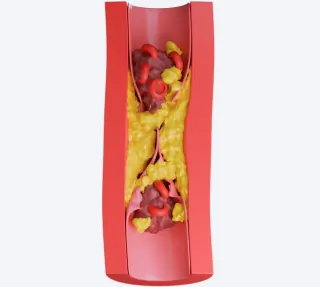
Conditions Treated by Thrombolysis
Think of Thrombolysis as a time-sensitive ‘undo’ button, before permanent damage hits. It uses special medicines to quickly dissolve/break up blood clots blocking key vessels, thereby restoring urgent blood flow to vital organs. As mentioned, it is mainly relevant for acute, life-threatening emergencies where time is critical.
Here's what it treats most often:
Heart Attacks (STEMI type):
When a clot chokes off blood to the heart muscle, it can cause crushing chest pain, shortness of breath, or arm/jaw pain. Thrombolysis can rapidly restore blood flow if the patient gets to a hospital soon after symptoms start, saving heart tissue and increasing chances of survival.
Ischemic Stroke (clot-based strokes):
This is the most common type of stroke, where a clot in the brain starves the brain cells of oxygen, leading to a sudden face droop, arm weakness and slurry speech (remember FAST: Face, Arms, Speech, Time). In this case, thrombolysis works best within 4.5 hours. Acting soon can help dissolve the clot and prevent paralysis or in worse scenarios, death.
Massive Pulmonary Embolism (PE):
A larger clot travels to the lungs, causing severe breathing difficulty, chest pain or even fainting. If the PE is causing critically low blood pressure, thrombolysis can stabilize the patient quickly.
Deep Vein Thrombosis (DVT) or leg/arm clots:
Extremely painful and swollen limbs from clots in deep veins; it prevents them from breaking off. Thrombolysis is also used for blocked dialysis catheters or peripheral arterial clots that risk limb loss.
It is important to note that not all clots qualify for thrombolysis. Doctors first check imaging and patient-risks first, before deciding thrombolysis.
Step-by-Step Guide to Thrombolysis
Thrombolysis has two major approaches — systemic (whole body, IV, infusion) or catheter-directed (specifically aimed at the clot) — both of which are intended to rapidly break down/dissolve life-threatening blood clots to reestablish life-giving flow. Based on the location, size, and urgency of the clot, doctors decide on which approach is feasible. Here’s what happens in each, step-by-step:
Systemic delivery (IV Method): This is the quickest method for emergency situations like heart attacks or strokes. A thin IV line is inserted directly into an arm vein — quick and painless — similar to a routine blood draw. Then, a clot-dissolving medication such as alteplase (tPA) is administered, over a period of 1-2 hours. The patient is hooked to monitors to track heart rate, blood pressure, oxygen and any early warning signs. No surgery is required. This is done in the ER or ICU. Most patients feel it working as symptoms ease.
Catheter-directed (targeted): For persistent clots (E.g., in the legs or lungs), doctors use local anaesthetic cream or an injection in the groin or arm area. With a real-time X-ray (fluoroscopy), a doctor guides a thin flexible tube (catheter) through a blood vessel directly to the clot. The process takes about an hour. The medication infuses directly for hours, or sometimes, days. Sometimes this is paired with mechanical thrombectomy (sucking/pulling out the clot). Less medications translates to fewer side effects.
Post-procedure care: 24-48 hours in a unit, with close monitoring for bleeding, which is the greatest risk, is standard. Pressure bandages on needle sites, frequent blood tests and bed rest initially. Pain medication is helpful and many walk soon after. Most patients are given blood thinners and lifestyle advice on how to manage. Full recovery tends to vary, but early treatment inevitably means better long-term outcomes, and shorter hospital stays. Questions make a difference. NO question is too ‘ridiculous’; it’s important to ask doctors every type of question, no matter how silly it may seem.
Indications for Thrombolysis
As mentioned above, thrombolysis is for life-threatening conditions where a blood clot obstructs blood flow to the heart, brain, lungs or limbs — think of sudden chest pain, stroke or extreme breathing distress. Only when the beneficial bonuses are exponentially greater than the risks of bleeding complications is it considered. These considerations are based upon imaging studies such as a CT or angiogram. Crucial to the procedure is timing — it is authorized only within the narrow ‘golden windows’ (4.5 hours for stroke, up to 12 hours max for heart attack).
Key go-ahead signs (Absolute indications):
Heart attack (MI): Persistent chest pain/heart damage and no quick access to stenting.
Stroke with brain tissue still salvageable: FAST symptoms — face drooping, slurred speech, arm weakness — are usually solid indicators.
Pulmonary embolism: (PE) causing shock — low blood pressure, fainting, severe shortness of breath.
Imaging and blood work will be rushed first. Contraindications (or stoppers) include active bleeding, recent bleeding/surgery/stroke, uncontrolled high BP (>185/110), bleeding disorders of any kind, recent major trauma or pregnancy. Being over 80 or having low blood sugar could also temporarily hold back treatment. Teams move very quickly on these decisions!
Thrombolysis is one of those procedures where survival chances skyrocket if done pronto. Very crucial to this decision making is full access to medical history. Ideally, anyone accompanying a patient ought to quickly get as much information as possible to assist medical teams.
Advanced Techniques in Thrombolysis
Advanced thrombolysis procedures are like high-tech versions of the classic clot-dissolving medications — they’re usually more precise, require less overall medication and reduce bleeding risks by honing in on the exact area of the clot. These procedures are reserved for more challenging scenarios like recalcitrant pulmonary clots or situations where patient profile isn’t suited for traditional IV therapy.
Ultrasound-mediated thrombolysis (UMT): Doctors beam safe sound waves at the clot, while infusing microbubbles of gas with IV meds. The waves make the bubbles pop, shaking up the clot, allowing the medication to penetrate deeper and work faster. Think of this like a mini-jackhammer accelerating the process of dissolution without flooding the entire body.
Catheter-directed with histotripsy or high-intensity ultrasound: A thin tube (catheter) is used to deliver focused ultrasound energy right to the clot, breaking it down mechanically without any need of medications! Histotripsy creates precise bubbles that burst clot fibres very cleanly. It’s fast, accurate and ideal for pulmonary or lower extremity (leg) clots.
Nanotech, Microbots, and Photothrombectomy: Cutting-edge trials use micro-robots or nanoparticles guided by lasers or magnets to chew through clots, or light-activated agents (photothrombectomy) that dissolved them on command. These offer ultra-low doses and targeted treatment, minimizing side effects. These are mostly used in super-speciality centers, with high-risk patient profiles. It’s always worth asking doctors if a patient qualifies!
These are mostly used in super-speciality centers, with high-risk patient profiles. It’s always worth asking doctors if a patient qualifies!
Benefits of Thrombolysis
Thrombolysis has huge potential benefits, from the perspective of giving a patient a fighting chance in emergencies like heart attacks, strokes or lung clots.
It restores blood flow very quickly, in minutes to hours, which can significantly increase survival chances. For E.g., mortality risks in STEMI heart attacks are reduced by 20-25% if the patient is thrombolysed early. Surgical prep comes with obvious delays, and this is an extremely crucial intervention.
Thrombolysis is minimally invasive, which means no large incisions are required, only an IV drip or catheter poke. In particular the success rates for strokes (improved movement/speech) and pulmonary embolisms (stable breathing) are remarkable. For heart attacks too, it preserves heart function with reasonable success.
There are reduced chances of clot reformation, and increased functionality of patients 30-35% of stroke patients report being more independent.
Risks and Complications of Thrombolysis
Like all emergency medications, thrombolysis comes with risks–primarily because the medications work on the entire clotting system to break down the clot quickly. The primary risk is bleeding, which occurs in 1-6% of patients. This may be milder (around IV sites) or more complex and severe: internal bleeding in the intestines/brain (intracranial hemorrhage), which is particularly serious if in seniors, diabetics, hypertensives or a patient who’s had recent surgery. Doctors monitor this carefully with blood work and imaging studies to detect early on.
Other possible complications include sudden blood pressure crashes (low BP leading to dizziness/light-headedness), extremely rare allergic reactions to the medication (difficulty breathing or skin rashes), irregular heart rhythms (arrhythmia) during heart attack therapy, pieces of a clot breaking off and travelling through the bloodstream (there exacerbating another blockage) or transient kidney overload from the dye (nephrotoxic) used in catheterization procedures.
However, the risks of doing nothing are often significantly worse — permanent brain damage or paralysis from stroke, heart failure or death from heart attack, limp amputation from leg clots or lung collapse from PE. Most studies show treated patients have 2-3 times better survival chances. Doctors weigh history (e.g., no active bleeds allowed) and monitor a patient 24/7. But, the time-specific nature of the treatment does not always afford room for alternatives.
Recovery and Rehabilitation
The objective is to heal safely without any new clots. The first step will be close patient monitoring for 24-48 hours, with checks on vitals, blood counts and bleeding signs hourly at first. For stroke patients, early movement (assisted walking within 24 hours) is safe and improves 90-day recovery, reducing risks of disability.
From there, the patient is eased into light activity: light walks on day 2-3 but no lifting, straining or sports for 1-2 weeks to avoid bleeding. If needed, blood thinners (like heparin or warfarin) are prescribed on a short-term basis, along with cholesterol meds. Over time, heart-favourable lifestyle habits are encouraged — consumption of fruits/veggies, cutting down on smoking, aerobic exercise daily (walking/swimming) and management of BP/diabetes.
Follow up visits include scans (CT or ultrasound) at 1 week and 1 month to evaluate blood vessels. Most people go back to work, driving, and regular life in 1-2 weeks, feeling stronger. For patients affected by stroke, physiotherapy assists in regaining strength/speech. It’s a continuous process that pays off, slowly. At times draining on the mind and spirit of a patient or caregiver, but crucial for recovery nonetheless. Full recovery means fewer scares down the road!
Choosing the Right Hospital
In the case of Thrombolysis, success rewards speed! The hospital where a patient undergoes thrombolysis can be the difference between life and death. First, consider speed — the sooner one can get to a hospital, the better are survival chances. Second comes expertise and safety. Opt for hospitals credited by JCI or NABH-credited centres with round-the-clock cath labs (for rapid access to clots), dedicated stroke units and experienced interventional cardiologists or neurologists who handle hundreds of patients each year. Such facilities provide CT/MRI scans quick (under 20 minutes) and ‘code stroke’ responses to beat the golden window.
Super-speciality hospitals are always preferred for the interdepartmental expertise and ability to handle multiple outcomes/case scenarios instantly. Look for ‘stroke-ready hospitals’, while searching and aim for a <45 minute travel window.
India Specific Data
India faces a massive stroke burden, with approximately 1.5 million cases yearly. 85-90% of these cases are ischemic (clot-based). However, due to key hurdles, thrombolysis reaches under 10% of patients.
| Aspect | Key India Data |
|---|---|
| Annual Strokes | 1.5M total; 85-90% suitable for thrombolysis |
| Treatment Rates | <10% nationally; 3.4% in some urban centers |
| Main Barriers | Awareness gaps, delays (>4.5h to hospital), rural access (only 25% near stroke-ready facilities), transport, costs, uncontrolled hypertension |
| Improvements | Better protocols in cities; public education campaigns needed for "FAST" recognition |
Questions to ask the medical team:
- Is the patient within the golden window (e.g., 4.5 hours for stroke), and do scans confirm a clot suitable for this?
- What type—systemic IV or catheter-directed—and why this approach, over alternatives like stenting?
- What are the patient’s personal bleeding risks based on age, diabetes, or history, and how will you monitor?
- How is the patient’s risk profile assessed?
- What's your hospital's door-to-needle time (aim <45 mins), and success rate for the patient’s condition?

