

Mitral Valve Repair & Replacement
 Home
Home- Mitral Valve Repair & Replacement


Medically Reviewed By Dr. Vishal Pingle, Cardiothoracic & Heart Transplant Surgeon. Updated on August 17, 2026
Mitral valve repair and replacement (MVR Surgery) are treatments for severe mitral regurgitation or stenosis, often caused by degenerative disease (age-related deterioration of the valve), rheumatic heart disease (common in India), or ischaemia. These treatments correct the valve problem and improve cardiac efficiency, while relieving symptoms such as shortness of breath.
Conditions Treated
Mitral valve repair and replacement procedures are used to address issues with the mitral valve — often referred to as the 'door' between the top left chamber of the heart (atrium) and the bottom left chamber of the heart (ventricle). The mitral valve may either leak (regurgitate) or become narrowed (stenosed), causing the heart to work too hard and resulting in symptoms such as shortness of breath, fatigue, swelling in the legs or feet, irregular heart rhythms, cough (sometimes accompanied by blood), chest pain, dizziness or even fainting. Left untreated, the underlying valve problem strains the heart over time, risking heart failure, fluid build-up in the lungs, clots, stroke or infections.
Regurgitation occurs when the valve fails to close tightly, allowing blood to leak back. This is often due to age-related deterioration, floppy leaflets (prolapse), torn chordae (the fine cords that anchor the valve leaflets), heart attack damage, or infection. Stenosis occurs when the valve opening stiffens and becomes narrower, blocking blood flow, often from scarring.
In India, rheumatic heart disease (due to untreated strep infections) is the cause of approximately 80–90% of these cases, particularly in younger adults (20s–40s) in rural settings. Reported data indicate 1–2 cases per 1,000 children aged 5–15 years, with the mitral valve the most commonly affected. Overall, valve disease affects an estimated 2–3 million Indians, according to some recent surveys, with surgery rates increasing in several high-volume centres. Early surgery can restore normal life, easing symptoms for most patients.
Indications for Mitral Valve Repair or Replacement (MVR Surgery)
Doctors recommend mitral valve repair or replacement (MVR Surgery) when the valve issue becomes serious enough to affect daily life and damage the heart long-term. It's not a decision taken lightly. Think of it like fixing a faulty door in the heart's pumping system before it causes bigger issues like heart failure. The main triggers are based on symptoms, heart scans (echocardiograms), and tests indicating poor heart function.
The following are important indicators that surgery is required:
- Severe symptoms: Shortness of breath when doing everyday tasks (such as climbing stairs), feeling unusually weak, having swollen legs, heart palpitations, or chest discomfort that cannot be controlled by medication.
- Leaky valve (severe regurgitation, grade 3–4): Significant backward blood flow on echocardiography, even if symptoms aren't severe, to avoid further weakening the heart.
- Narrowed valve (stenosis): Valve area under 1.5 cm² with high pressures, leading to lung congestion or clot formation.
- Heart strain indicators: Left ventricle enlargement, ejection fraction below 60%, or pulmonary hypertension — early treatment maintains heart strength, instead of letting it degrade before addressing the issue.
- High-risk indicators: Unsuccessful medical treatment or balloon valvuloplasty, recurrent infections (endocarditis), or clots despite blood thinners. Repair is preferred first for repairable leaks (as in prolapse); replacement for valves that are scarred or rheumatic, as commonly seen in India.
Reference: Circulation – Twenty-Year Outcome After Mitral Repair Versus Replacement for Severe Degenerative Mitral Regurgitation (2017).
Step-by-Step Guide to Repair and Replacement Procedures (MVR Surgery)
Surgical repair or replacement of the mitral valve, while not always an emergency, is major heart surgery to fix a faulty valve. The procedure is usually done under general anaesthesia. The heart is stopped, and a heart-lung machine takes over the work of circulating and oxygenating the blood. There are two surgical approaches: traditional (cutting through the breastbone — full sternotomy) and minimally invasive (smaller cuts between the ribs). Based on the extent of damage, surgeons decide whether a repair (preferred, preserves tissue) or replacement is needed.
Here are step-by-step guides to both:
Repair (often for leaky valves from prolapse)
- Prep and access: The patient is put to sleep, the chest is opened and the heart is placed on the heart-lung machine.
- Open and inspect: The surgeon examines the mitral valve through the left atrium and identifies issues such as floppy leaflets or torn chordae.
- Fix the valve: Excess tissue is removed and the leaflets are repaired, artificial chordae are placed where needed, and a support ring (annuloplasty ring) is stitched around the valve's base to reinforce it.
- Test and close: The repaired valve is checked for leaks by filling the chamber with saline, and the heart is restarted. Finally, the chest incisions are closed.
- The patient is moved to the ICU for close monitoring.
Replacement (for severely scarred or rheumatic valves)
- Prep and access: The same as above — chest opened (via sternotomy or thoracotomy), bypass machine turned on, and heart stopped.
- Removal of old valve: The damaged native valve is carefully cut out.
- Implant new valve: A new prosthetic valve — either mechanical (made of pyrolytic carbon and metal, for durability) or tissue (which usually avoids the need for lifelong blood thinners) — is sewn into place with stitches, like securing a new door.
- Test and close: The new valve is tested, the heart is restarted and the incisions are closed.
- Surgery lasts 3–5 hours.
- Patients recover in the ICU, and most notice their breathlessness easing within days.
In India, minimally invasive approaches are being increasingly adopted as they reduce pain, improve recovery time and reduce the risk of infection, with success and precision rates similar to those of traditional sternotomy.
Advanced Techniques in Mitral Valve Repair and Replacement (MVR Surgery)
Advancements in mitral valve surgery revolve around making the procedure less invasive — smaller incisions, quicker recovery times, less pain and potentially fewer wound-healing complications. These advancements are particularly useful for elderly patients or those with other medical problems, which is often the case in India, where rheumatic cases need precise care.
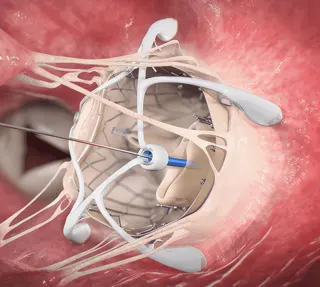
Transcatheter Edge-to-Edge Repair (TEER): One of the biggest advancements in mitral valve repair is the TEER procedure. It's a catheter-based process in which the leaking leaflets of the heart valve are 'clipped' without surgically opening the chest. The clips used for closure include the MitraClip and MyClip.
The procedure is done through the groin vein, and is typically recommended for cases of mitral regurgitation where surgery is not a viable option — patients where age, overall frailty and other comorbidities become factors. For doctors, it's always about analysing these trade-offs.
Surgery leaves less room for revisions, while repeat TEER procedures have been reported at around 9% at the five-year mark in published series. However, TEER is the more gentle short-term option. In some patients, the risks of surgery are not worth the benefits. TEER volumes have grown rapidly in India, with high procedural success rates reported in recent trials. In terms of quality of life, TEER provides very meaningful relief, especially in high-risk and older patients, which might explain its rising popularity. Hospital stay after TEER is usually short, often one to two days.
Sometimes, the term TEER is used interchangeably with the MitraClip. However, the two aren't the same. TEER is the procedure itself, while MitraClip is a type of device used for clipping the leaky leaflets.
The MitraClip is a device manufactured by Abbott; it has been a global standard for many years, with a lot of clinical experience behind it. The MyClip is a newer entrant in the Indian market, manufactured by Meril Life Sciences. Meril reports that MyClip offers different handling and clipping positions, and states that it works particularly well with small or complex valve anatomies. As a newer device, long-term durability data for MyClip is still accumulating.
A more practical difference is cost. MitraClip is significantly more expensive in Indian hospitals, while MyClip is available at a considerably lower price. The most important factors, however, are the patient's valve anatomy, surgical risk and the experience of the operating team.
Minimally Invasive Surgery: This approach uses a cut of 5–6 cm between the ribs, instead of splitting the breastbone. This type of surgery requires special tools and cameras, and the recovery period is only 2–4 weeks, versus 8–12 weeks for a typical sternotomy.
Reference: JAMA – Minithoracotomy vs Conventional Sternotomy for Mitral Valve Repair: A Randomized Clinical Trial (2023).
Robot-Assisted Repair: Tiny ports are inserted in the chest, allowing robotic arms to carry out highly precise repairs of heart valve leaflets or chordae. Excellent visualisation reduces complications, with high success rates reported at many super-speciality centres.
Benefits and Risks of MVR Surgery
A mitral valve repair or replacement is a life-changing procedure that relieves breathlessness and fatigue so that patients can resume their daily activities. Repair is the preferred option because it saves the patient's own natural valve. Replacement uses a durable prosthetic when repair isn't possible, as in severe rheumatic valve disease, which is common in India.
Here are some comparative benefits and risks of repair and replacement procedures.
| Aspect | Repair | Replacement |
|---|---|---|
| Main benefits | Preserves native tissue — blood thinners are usually not needed long-term (unless the patient has atrial fibrillation or another indication); faster recovery; better long-term heart function and survival. | Strong fix for tough cases; quick symptom relief even in complex disease. Mechanical valves are highly durable and can last for decades; tissue valves typically last 10–15 years but usually avoid lifelong blood thinners. |
| Key risks | The valve may leak again over time; irregular heartbeat (atrial fibrillation) is common after surgery; rare infection or stroke. | Mechanical valves require daily blood thinners, carrying an annual bleeding risk; risk of clots or valve failure; tissue valves carry a higher chance of reoperation as they wear out. |
All cardiac procedures come with their risks. Both repair and replacement procedures carry operative mortality of roughly 1–3%, and closer to 1% in high-volume super-speciality hospitals. Individual case profiles are assessed by doctors using risk stratification tools such as the STS risk calculator or EuroSCORE. Typically, repair suits leaks and replacement suits scarred valves, but medical teams weigh many other factors before deciding.
Reference: New England Journal of Medicine – Mechanical or Biologic Prostheses for Aortic-Valve and Mitral-Valve Replacement (2017).
Rehabilitation and Recovery after MVR Surgery
The road to recovery from mitral valve surgery is a gradual process of regaining strength. Patients will feel a big difference in their energy and ability to breathe within a matter of weeks. After the procedure, they wake up in the ICU for 1–2 days with a breathing tube and chest drains in place, and then move to a regular hospital room for a 5–7 day stay (usually shorter after minimally invasive procedures).
Early days (1–4 weeks): Rest, and start with assisted walks to avoid clots. Manage pain with medication and eat light, healthy food. Avoid lifting more than 5 kg, and avoid driving.
Rehab phases (1–3 months): The crucial cardiac rehab window. Phase 1 involves breathing exercises and walking. Phase 2 involves supervised cardiac exercise such as stationary cycling or swimming, typically prescribed for 30 minutes, 3–5 times a week. Being dedicated and regular during this phase reduces the likelihood of rehospitalisation.
Long term (3–6 months and beyond): Resume work and household activities; echocardiograms monitor progress. Cardiac rehab centres in India report good outcomes, with most patients returning to normal life within three months. Older patients with high blood pressure are given more individualised programmes to improve their outcomes. Here too, the basics apply — adhering to medication, weight management (for patients who are overweight or obese), and stopping smoking for maximum benefit.
Outcomes in India
In India, mitral valve surgeries have high reported success rates. Rheumatic heart disease accounts for approximately 80–90% of valve problems, affecting an estimated 2–3 million people, particularly younger people in rural India, where the prevalence is reported at 1–2 cases per 1,000 children aged 5–15 years.
Operative mortality is low: roughly 1–3% overall, and under 1% in high-volume hospitals. In the long term, around 90% of patients remain free of symptoms at 5–10 years, with outcomes at leading Indian centres comparable to global standards.
Questions to Ask Your Doctor
For a patient, any surgical admission can be anxiety-inducing. Well-thought-out questions help patients gain a sense of trust and understanding in the medical team's approach. This allows them and their family members to make decisions with more confidence. Here are a few questions that could help in the case of mitral valve repair and replacement:
- Am I a better candidate for repair or replacement, and why? Please explain this based on my type of valve and malfunction.
- What is your experience? How many of these surgeries do you perform per year, and what is your success rate for this type of valve?
- What about timing? Should we do this now, despite the mild symptoms, or do we wait and watch?
- Which approach will be used — traditional open-heart surgery, minimally invasive, robotic, or transcatheter, such as TEER with a MitraClip? What are the advantages and disadvantages of each?
- What risks are specific to me? Given my age, blood pressure or other issues, what is my chance of stroke or infection, or of needing blood thinners lifelong? How do you assess these risks?
- What does recovery look like? What is the prognosis, the expected hospital stay, the time before returning to work, the rehab plan, and the long-term medication?
- Does my heart need any other repairs? If so, can they be done at the same time?
- What are the alternatives — balloon valvuloplasty, medication, or waiting and watching?
- What is the total cost, and what rehab support programme does the hospital offer?

